
Community
Minnesota State Senate election results: DFL retains and widens control
By Katherine Langford
Advertisement · Why this ad?
Katherine oversees editorial operations across all six brands. Before joining The Meridan Group, she spent 14 years at the Minneapolis Star Tribune, where she led the metro desk through its digital transformation. She holds a Master's in Journalism from Northwestern's Medill School.
More from Katherine →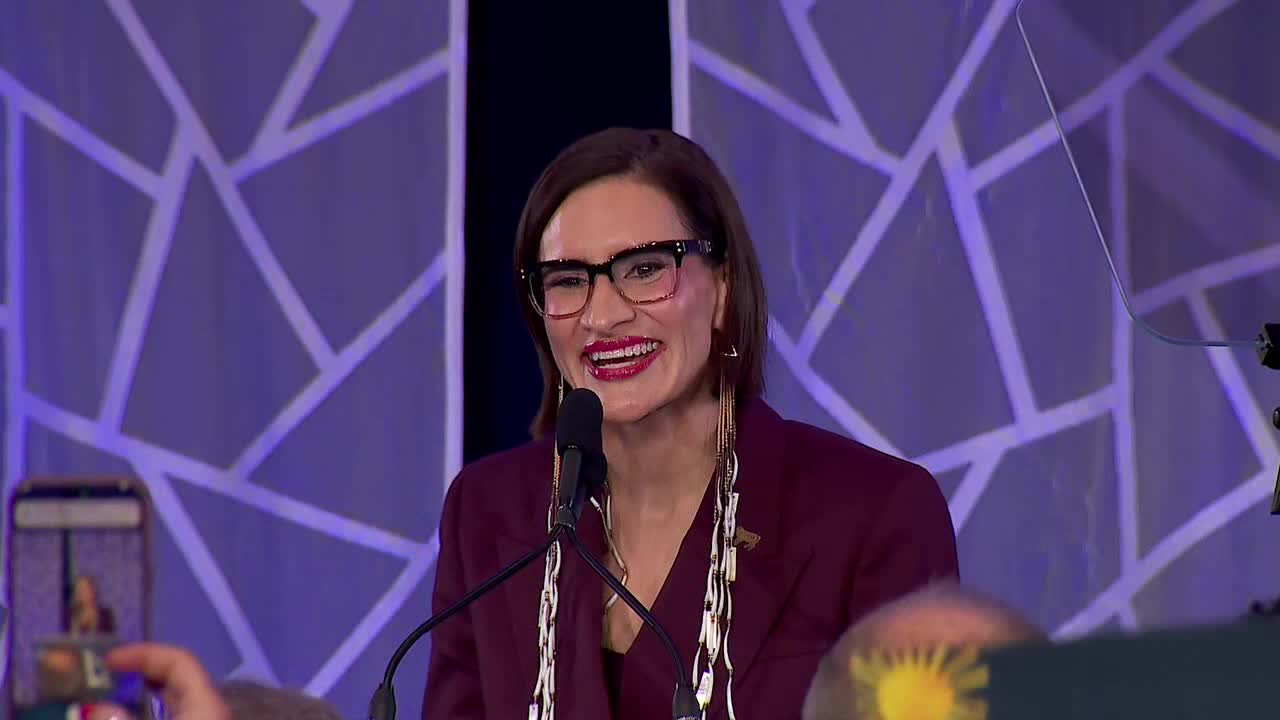
On a chilly November evening in 2026, Peggy Flanagan stood before a cheering crowd in Minneapolis, the weight of history resting on her shoulders. As the first Native American woman to be elected to the U.S. Senate, her victory was not just a personal achievement, but a monumental moment for representation in American politics. Flanagan's win over former sports broadcaster Michele Tafoya marked a significant shift in Minnesota's political landscape, reflecting changing demographics and values in the state.
In a decisive victory, Flanagan secured 53.7% of the vote against Tafoya's 43.6%. With 99% of the votes counted, her triumph was anchored in strong support from Minnesota's largest counties, particularly Hennepin and Ramsey. Flanagan's performance in these populous areas was crucial, as they accounted for a substantial portion of the total votes cast in the election. Hennepin County alone recorded 664,237 votes, the highest in the state, while Ramsey County contributed 249,770 votes.
Flanagan's campaign thrived on grassroots mobilization and a message that resonated with many voters, emphasizing issues such as education, healthcare, and social justice. Her ability to connect with constituents, particularly in urban areas, helped her build a coalition that ultimately propelled her to victory. In contrast, Tafoya found her support predominantly in rural counties, winning 72 out of Minnesota's 87 counties, yet her margins were not enough to overcome Flanagan's significant urban advantage.
The election results revealed a stark divide in voting patterns across the state. Flanagan excelled in counties like Dakota, Anoka, Olmsted, St. Louis, and Washington, where she led by substantial margins. For instance, she garnered a remarkable 51.5 percentage points in Ramsey County and a 45.9-point advantage in Hennepin County. These results highlight the growing importance of urban voters in shaping Minnesota's political future.
Conversely, Tafoya's victories in rural areas underscore a continuing trend of political polarization in the state. The close contests in counties such as Anoka, Nicollet, and Rice, where Flanagan's margins were narrow—1.9 points, 2.5 points, and 3.3 points respectively—demonstrate that while urban centers may dominate in numbers, rural voices remain a critical component of Minnesota's electoral landscape.
Flanagan's historic win resonates deeply within Minnesota's diverse communities. As the first Native American woman in the Senate, she embodies a breakthrough for underrepresented groups, signaling a shift towards inclusivity and equity in governmental representation. Her journey to this point has inspired many, particularly young women and girls of color, who see her success as a testament to the possibilities that lie ahead.
Community leaders have lauded Flanagan's commitment to addressing the unique challenges faced by Indigenous populations and other marginalized groups. Her platform has consistently prioritized education, healthcare, and economic opportunities, aiming to uplift communities that have historically been overlooked. The impact of her leadership is expected to extend beyond her term, encouraging a new generation of leaders to engage in public service.
The grassroots efforts that propelled Flanagan to victory were a testament to the power of community organizing. Volunteers from various backgrounds rallied behind her campaign, illustrating the collective desire for change. Local organizations played a pivotal role in mobilizing voters, particularly in urban centers where turnout was crucial. This grassroots engagement not only bolstered Flanagan's campaign but also fostered a sense of community ownership over the electoral process.
As Flanagan prepares to take her seat in the Senate, the importance of sustained community involvement cannot be overstated. Her victory serves as a reminder that active participation in democracy can lead to transformative change, particularly when diverse voices unite for a common purpose.
As Minnesota embarks on a new chapter with Flanagan in the Senate, the implications of her election extend far beyond state lines. Her presence in Washington, D.C., represents a commitment to addressing the needs of all Minnesotans, particularly those historically marginalized. Flanagan's agenda will likely focus on critical issues such as healthcare reform, education funding, and climate change, all of which resonate deeply with her constituents.
Moreover, her role as a trailblazer will undoubtedly influence future elections and the political landscape in Minnesota and beyond. The significance of her victory cannot be understated; it signals a growing recognition of the need for diverse representation in government. As Flanagan steps into her new role, the expectations from her constituents will be high, and her ability to navigate the complexities of national politics will be closely scrutinized.
Many community members expressed their excitement and pride in Flanagan's victory. Local activist and educator Maria Torres stated, "This is a moment of hope for our children. They can see that they too can achieve greatness, no matter their background." Her comments reflect a broader sentiment among constituents who feel that Flanagan's election is a step toward a more representative and inclusive government.
Additionally, Flanagan's win has sparked conversations about the importance of Indigenous representation in politics. Tribal leader and activist John Red Feather emphasized, "Having Peggy in the Senate is not just about her being a Native American woman; it's about having someone who understands the struggles of our communities and will fight for us at the national level." Such sentiments underline the profound impact Flanagan's victory has on various communities across Minnesota.
While Flanagan's victory is celebrated, it also presents challenges. As she steps into her role in the Senate, she will need to navigate a complex political landscape that includes partisan divides and pressing national issues. Her ability to build coalitions and work across the aisle will be crucial in advancing her agenda and ensuring that the voices of her constituents are heard.
Moreover, Flanagan will face the task of addressing the immediate concerns of her constituents, including rising healthcare costs, educational disparities, and climate change. These issues require not only legislative solutions but also a commitment to engaging with the communities most affected by these challenges. Her approach will likely emphasize collaboration with local leaders and organizations to create sustainable change.
In conclusion, Peggy Flanagan's historic win in the 2026 U.S. Senate election marks a pivotal moment for Minnesota and the nation. As she takes office, her journey will inspire hope and encourage active civic engagement among all residents. The future is bright for Minnesota as it embraces a new era of leadership that reflects the diversity and richness of its communities.
By Katherine Langford

By Katherine Langford

By Katherine Langford
By Katherine Langford